
Schaller Groups
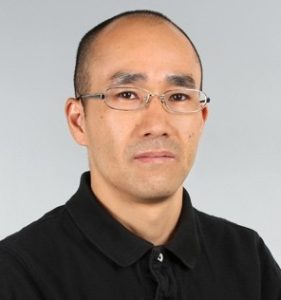
Dr. Masashi Hasegawa
____________
Schaller Research Group Leader,
Institut für Physiology and Pathophysiology
Im Neuenheimer Feld 326
69120 Heidelberg
masashi.hasegawa@physiologie.uni-heidelberg.de
My laboratory studies how brain activity generates body movement in mice using an all-optical approach to read and “write” neural activity.
Even a simple action, such as reaching for a glass on a table, involves myriadneurons across several brain regions. Recent technological advances enable us toobserve the activity of hundreds or thousands of neurons in living animals. Theselarge-scale neuronal recordings have advanced our understanding of howneurons fire during movement. Nevertheless, observation alone does notestablish causality. We do not yet know which features of the neural activity weobserve contribute to the generation of body movement. Our lab aims to tacklethis conceptually simple but experimentally challenging research question usingan all-optical approach that combines in vivo two-photon calcium imaging withtwo-photon holographic optogenetics. This state-of-the-art technique allows usnot only to “read” neural activity but also to “write” activity into experimenter-selected neurons. By first recording neural activity, then selectively stimulatingspecific neurons and observing the resulting behavior, we aim to identify whichfeatures of neural activity causally contribute to body movement.
M. Hasegawa, B. Gruszka, MS. Finch, VJ. Athreya, AD. Milstein, IA. Oldenburg.The Importance of Synchrony in the Neural Control of Movement. bioRxiv, doi:10.64898/2026.06.26.734805 (2026).
C Thome, JM Janssen, S Karabulut, C Acuna, E D’Este, SJ Soyka, K Baum, M Bock,N Lehmann, J Roos, NA Stevens, M Hasegawa, DA Ganea, CM Benoit, JGründemann, LY Min, KM Bird, C Schultz, V Bennett, PM Jenkins, M Engelhardt.Live imaging of excitable axonal microdomains in ankyrin-G-GFP mice. eLife(2025).
M. Hasegawa, Z. Huang, R. Paricio-Montesinos, J. Gründemann, Network statechanges in sensory thalamus represent learned outcomes. Nat. Commun. 15, 7830(2024).
M. Ohtake, K. Abe, M. Hasegawa, T. Itokazu, V. Selvakumar, A. Matunis, E. Stacy,E. Froebrich, N. Huynh, H. Lee, Y. Kambe, T. Yamamoto, T. K. Sato, T. R. Sato,Encoding of self-initiated actions in axon terminals of the mesocortical pathway.Neurophotonics 11, 1–12 (2024).
JA. Taylor, M. Hasegawa, CM. Benoit, JA. Freire, M. Theodore, DA. Ganea, SM.Innocenti, T. Lu, J. Gründemann, Single cell plasticity and population codingstability in auditory thalamus upon associative learning. Nat. Commun. 12, 2438(2021).
T. Itokazu, M. Hasegawa, R. Kimura, H. Osaki, U.-R. Albrecht, K. Sohya, S.Chakrabarti, H. Itoh, T. Ito, T. K. Sato, T. R. Sato, Streamlined sensory motorcommunication through cortical reciprocal connectivity in a visually guided eyemovement task. Nat. Commun. 9, 338 (2018).
M. Hasegawa, K. Majima, T. Itokazu, T. Maki, U.-R. Albrecht, N. Castner, M.Izumo, K. Sohya, T. K. Sato, Y. Kamitani, T. R. Sato, Selective Suppression of LocalCircuits during Movement Preparation in the Mouse Motor Cortex. Cell Rep. 18,2676–2686 (2017).
N. Niethard, M. Hasegawa, T. Itokazu, CN. Oyanedel, J. Born, TR. Sato, Sleep-Stage-Specific Regulation of Cortical Excitation and Inhibition. Curr. Biol. 26,2739–2749 (2016).